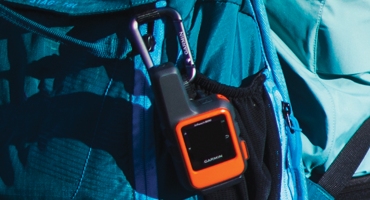
Earlier this year, Garmin connected with Snow Leopard Trust to help the organization become inReach® device users. The Trust’s staff studies the ecology and behavior of the endangered snow leopard and its prey species to better understand the cat's conservation status and needs, the threats it faces and the way it interacts with humans.
We recently contacted Matthias Fiechter, communications manager at Snow Leopard Trust, to learn more about the organization’s work and how poaching, mining and development threaten endangered snow leopards. We also asked how the organization manages their communications in the field using inReach satellite communicators.
Garmin: What is the main focus of your conservation efforts?
Matthias: On the conservation side, our main focus is on managing and mitigating conflicts with local herding communities. Retaliation killings – because of attacks on livestock – are the most urgent threat to snow leopards right now, and we're working with herders to prevent such attacks or compensate for them when they do happen.
Garmin: Is poaching a problem, as it is with other threatened species around the globe?
Matthias: Poaching is a multi-faceted problem. Broadly speaking, there are two distinct types of poaching: commercial poaching (for body parts, pelts, etc.) and incidental poaching in retaliation for livestock attacks or by accident, for example, if a snow leopard steps in a wolf trap. Both are serious threats, of course, though as mentioned, retaliation seems more pressing in the case of the snow leopard.
To stop commercial poaching, we need to work on all parts of the poaching chain: reduce demand, cut off trafficking networks and transportation infrastructure, strengthen law enforcement and reduce incentives for local people to support poachers. We are currently working with partners on setting up a snow leopard poaching database to improve the flow of information between countries and agencies. We're also training rangers to prosecute cases more effectively.
When it comes to the more incidental poaching, the key is in working with local communities and helping them coexist with the predator. We try to do this through programs such as obtaining livestock insurance to help compensate for losses, building corrals to prevent them or producing handicrafts to supplement peoples’ incomes. Finally, education is a key component in all of this as well.
Garmin: How is your organization working to address mining and development threats?
Matthias: When it comes to mining and other infrastructure development, we must be clear and realistic: we're not going to stop these things from happening, nor do we necessarily want to. We all consume energy and other resources, and we all have precious minerals in our phones and other gadgets.
We do want to make sure, however, that biodiversity hotspots (and particularly key snow leopard habitats) are left untouched. Through our research, we try to identify where those key areas are and how they connect. For instance, we've identified Tost Mountains, in the mineral-rich Gobi Desert of Mongolia, as an important habitat and a bridge between two large national parks, and we’ve managed to work with local communities and authorities to get it protected.
Garmin: We’ve seen that your snow leopard research is conducted in several Asian countries. What is the terrain like where you’re working?
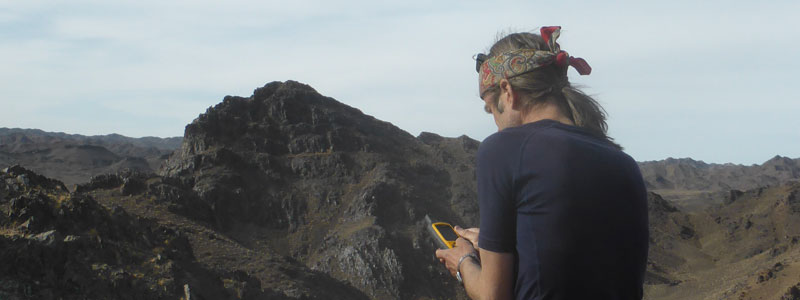
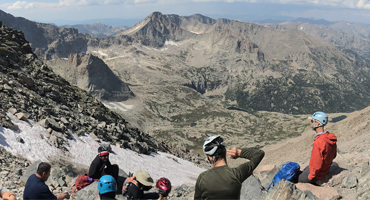
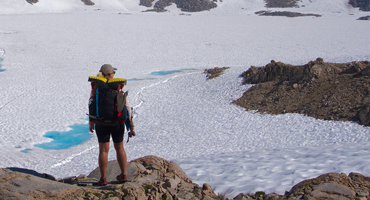
Matthias: We often work in high alpine conditions above 5,000 meters. Our work areas in Mongolia are around 2,000 meters. There are common characteristics though: These areas are usually very remote – often 50 or more kilometers from the nearest settlement and far from phone or internet connections. The terrain is rugged and steep, and the climate tends to be rather extreme. It’s very cold in winter, sometimes quite hot in summer, and usually very dry and quite barren. All these factors make for a physically and logistically challenging environment to work in.
Garmin: Given your remote work, it makes sense that you turned to inReach for communications. Was there a particular instance that demonstrated you had a need for a satellite communicator?
Matthias: We had a lot of instances where researchers needed to communicate that they'd be back to camp later than planned or wanted to ask a colleague to come to their location and bring certain equipment. With our previous communications system, there was no way of conveying those messages – there were only different codes for different emergencies. Having an inReach device makes this communication very easy. It's like having your phone with you out in the field.
Garmin: Now that you have inReach devices for your staff, how are they being used?
Matthias: The team uses inReach devices for all sorts of communications in the field, including check-ins, but also for text messaging with family members back home. There haven't been any emergencies since we acquired the inReach devices, but that's another area where they would be used. Everyone is briefed on how the emergency communications function. Fortunately, we haven't had a real emergency in the last few years.
Thanks to Matthias Fiechter, Gustaf Samelius and Örjan Johansson of Snow Leopard Trust for contributing and assisting with this article. Learn more about the organization and its conservation work at www.snowleopard.org.
photos by: SLCF Mongolia / Snow Leopard Trust
|